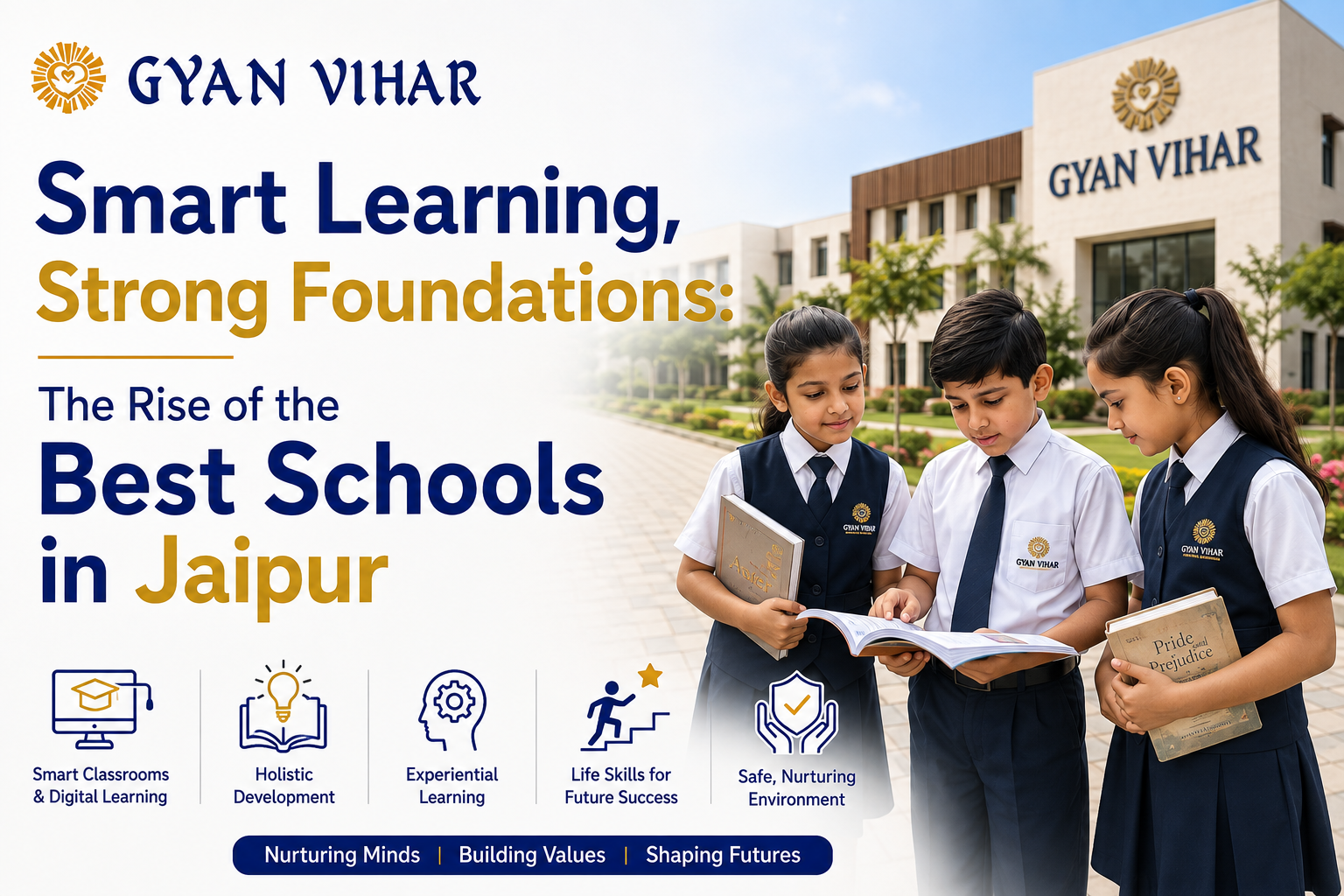
In today’s fast-changing world, education is no longer limited to textbooks and classrooms. Parents now look for institutions that prepare children for real-life challenges, digital transformation, and global opportunities. This is where modern education plays a vital role. At Gyan Vihar School, learning goes beyond traditional teaching methods, creating an engaging, practical, and future-focused environment. Many parents consider it among the best schools in Jaipur because of its innovative academic approach, strong values, and student-centered philosophy.
Modern education focuses on developing critical thinking, creativity, communication skills, and emotional intelligence, helping students grow into confident and responsible individuals. In this blog, we will explore the definition, importance, benefits, challenges, and overall evaluation of modern education in a simple, clear, and informative way.
What is Modern Education?
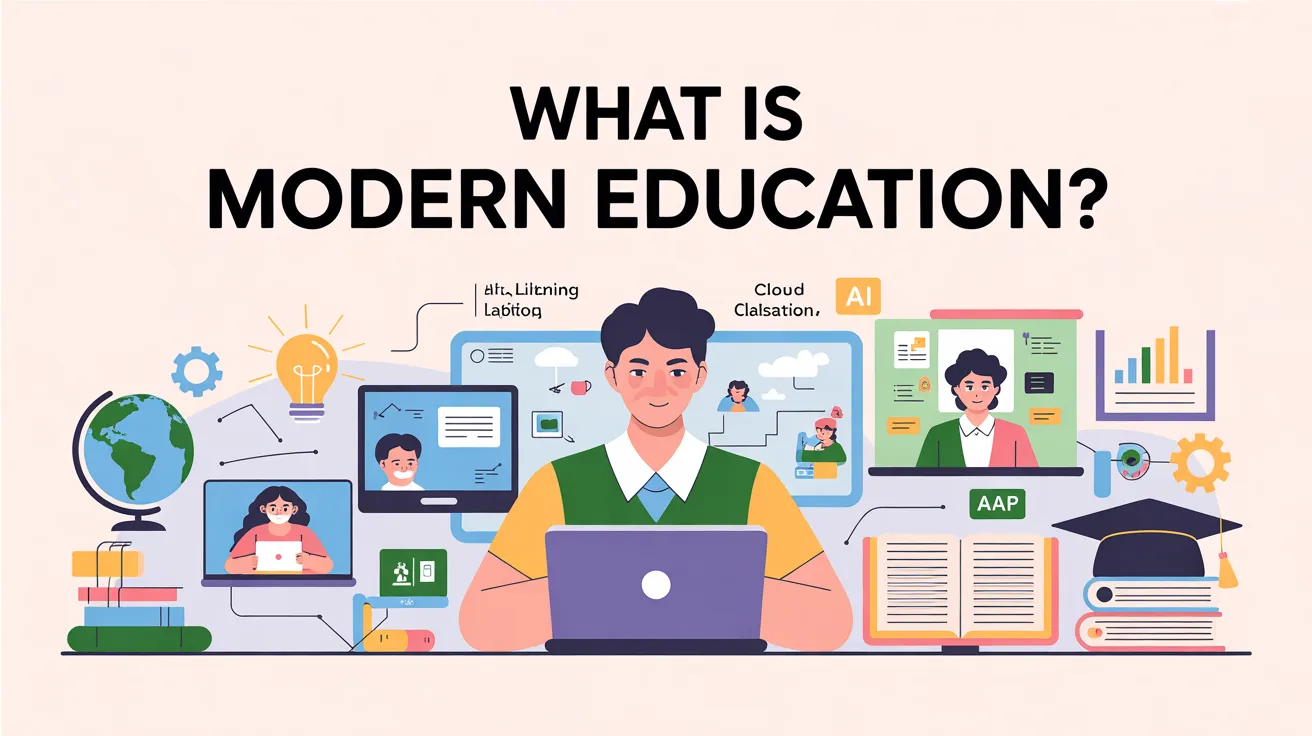
Modern education refers to a contemporary system of teaching and learning that emphasizes practical knowledge, skill development, creativity, and holistic growth. Unlike traditional education, which mainly focuses on rote learning and memorization, modern education encourages students to think, explore, question, and innovate.
Key features of modern education include:
- Student-centered learning instead of teacher-centered teaching
- Interactive classrooms with digital tools and smart boards
- Project-based learning to enhance practical understanding
- Critical thinking and problem-solving skills
- Focus on communication, teamwork, and leadership
Modern education aims to prepare students not just for exams, but for real-world situations. It helps them become adaptable, confident, and capable of handling future challenges with ease.
Who Introduced Modern Education in India?
The foundation of modern education in India was laid during the British era, with the introduction of Western-style education systems. One of the most influential figures was Lord Thomas Babington Macaulay, who promoted English education and modern subjects such as science, mathematics, and philosophy.
Later, several Indian reformers and educationists played a key role in shaping modern education in India, including:
- Raja Ram Mohan Roy, who supported scientific and rational education
- Mahatma Gandhi, who emphasized value-based and experiential learning
- Rabindranath Tagore, who promoted creativity, freedom of thought, and holistic development
Over time, modern education in India has evolved to include digital learning, activity-based teaching, life skills, and global exposure, making it more relevant for today’s generation.
Importance of Modern Education
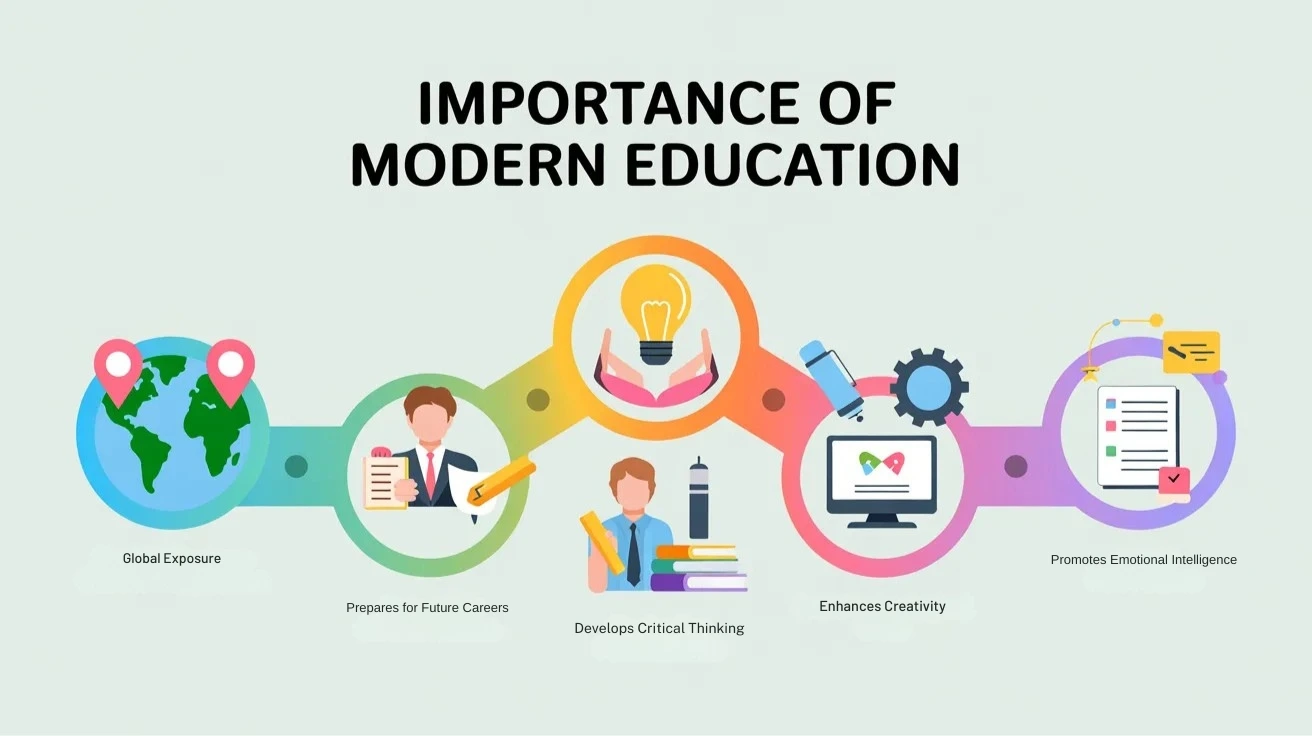
Modern education is essential in today’s competitive and technology-driven world. It equips students with skills that go far beyond academic knowledge.
Key Reasons Why Modern Education is Important
- Develops Critical Thinking: Encourages students to analyze, question, and solve problems independently.
- Enhances Creativity: Supports innovation, imagination, and original thinking.
- Improves Communication Skills: Builds confidence in speaking, writing, and expressing ideas.
- Promotes Emotional Intelligence: Teaches empathy, teamwork, and emotional balance.
- Prepares for Future Careers: Aligns learning with modern career demands and global trends.
With these benefits, modern education helps students become lifelong learners and responsible citizens. This approach is a major reason why parents seek institutions known as one of the best schools in Jaipur that follow contemporary teaching practices.
What is the Need for Modern Education?
The world is changing rapidly, driven by technology, artificial intelligence, and global connectivity. Traditional education systems alone cannot prepare students for such dynamic environments. This is why modern education has become a necessity rather than a choice.
Reasons for the Growing Need for Modern Education
- Technological Advancements: Students must learn digital literacy, coding basics, and online research skills.
- Changing Job Market: Future careers require creativity, adaptability, and innovation.
- Global Exposure: Students need cultural awareness and communication skills to thrive internationally.
- Life Skills Development: Decision-making, leadership, and problem-solving are essential life skills.
- Personal Growth: Modern education supports emotional well-being and confidence building.
By addressing these needs, modern education ensures students are not only academically strong but also socially and emotionally balanced.
Read also – Things Parents Should Know Before Choosing a CBSE School
Advantages of Modern Education at Gyan Vihar School

At Gyan Vihar School, modern education is thoughtfully designed to create meaningful learning experiences. The school combines advanced teaching methodologies with strong ethical values, making it a preferred choice for families looking for quality education. Many parents regard it as one of the best schools in Jaipur because of its balanced and progressive academic environment.
Key Advantages
- Smart Classrooms: Digital boards and multimedia tools make lessons interactive and engaging.
- Activity-Based Learning: Students participate in projects, experiments, and real-life case studies.
- AI-Integrated Learning: Technology supports personalized education paths and deeper understanding.
- Holistic Development: Equal focus on academics, sports, arts, and life skills.
- Student-Centered Approach: Teaching is adapted to individual learning styles and abilities.
Through modern education, students develop curiosity, independence, and confidence. The school ensures that learning is not stressful but enjoyable and meaningful.
Challenges with Modern Education
While modern education offers numerous benefits, it also comes with certain challenges that need careful management.
Common Challenges
- Digital Dependency: Excessive use of technology may reduce physical activity and social interaction.
- High Cost of Infrastructure: Smart classrooms and digital tools require significant investment.
- Teacher Training: Educators must continuously upgrade their skills to match modern teaching methods.
- Screen Time Concerns: Prolonged exposure to screens may affect health if not balanced properly.
- Adaptation Issues: Some students may take time to adjust to interactive and flexible learning styles.
These challenges highlight the importance of maintaining a balanced approach, blending technology with traditional values and personal interaction.
Evaluation of Modern Education
Evaluating modern education involves assessing how effectively it supports students’ intellectual, emotional, and social development. This evaluation goes beyond exam scores and focuses on overall personality growth.
Key Evaluation Criteria
- Academic Performance: Concept clarity, analytical skills, and problem-solving ability.
- Skill Development: Communication, leadership, teamwork, and creativity.
- Emotional Growth: Confidence, self-discipline, and resilience.
- Practical Knowledge: Ability to apply learning in real-life situations.
- Ethical Values: Moral understanding, empathy, and social responsibility.
Modern education aims to create well-rounded individuals who are capable, compassionate, and confident. Schools that successfully implement these principles naturally gain recognition as leading educational institutions.
Conclusion
In an era defined by innovation and global connectivity, modern education has become essential for shaping future-ready individuals. By combining technology, creativity, and value-based learning, it prepares students to face life’s challenges with confidence and wisdom. Gyan Vihar School stands as a strong example of how thoughtful educational practices can transform learning experiences. Its focus on holistic development, academic excellence, and personal growth makes it one of the most respected choices for parents seeking the best school in Jaipur.
Through modern education, students not only gain knowledge but also develop character, curiosity, and courage qualities that truly define success in today’s world.